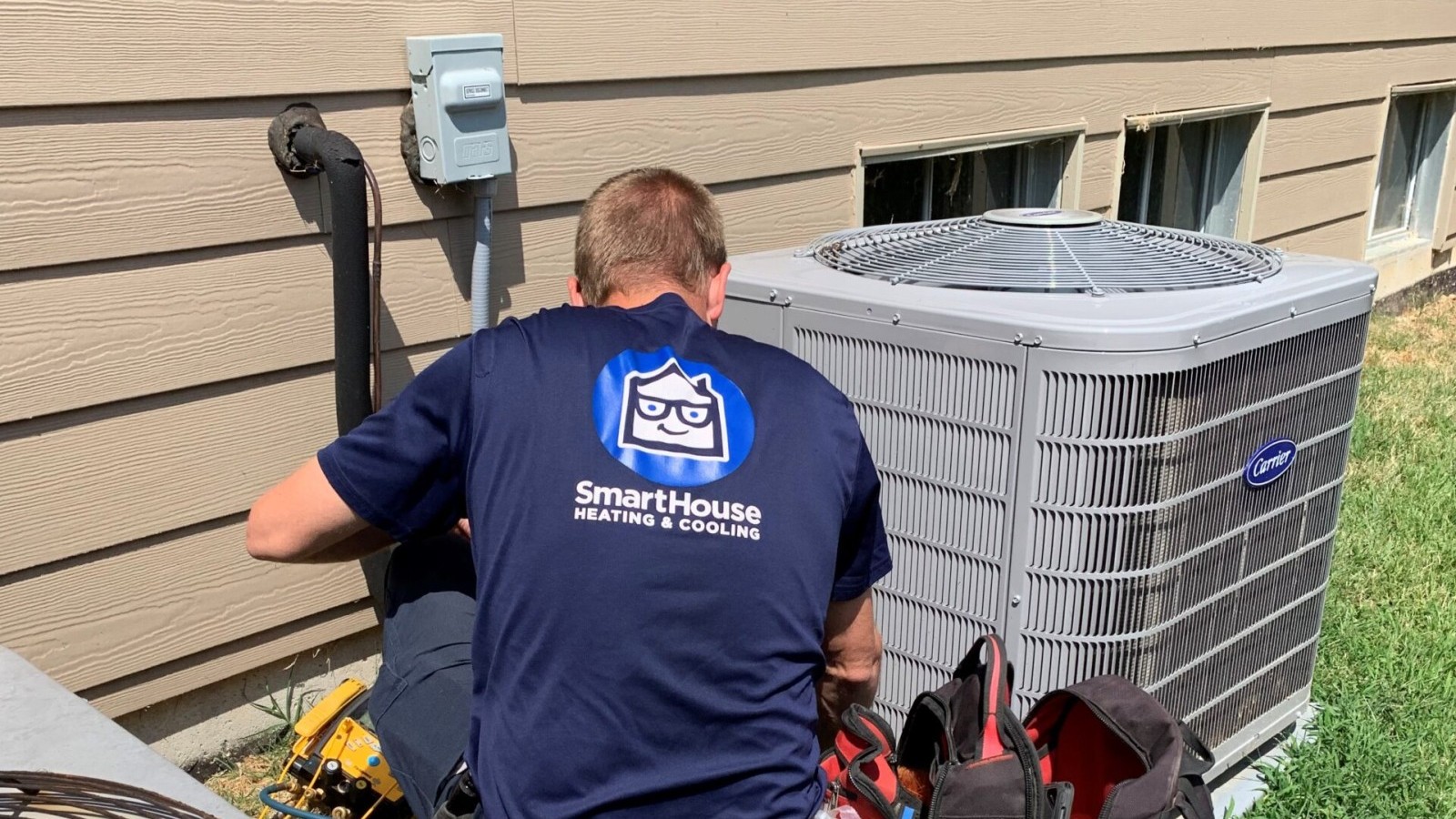
Cooling System Refrigerant Leaks: Signs, Causes, and What Homeowners Should Know. AC and heat pump refrigerant leaks aren’t just an inconvenience for St. Louis homeowners. They can increase your bills, hurt the environment, cause more property damage over time, and cause health problems.
It’s important to know how to recognize the signs of a refrigerant leak. And if you have one, call a licensed expert from SmartHouse for fast, safe cooling system repair services in St. Louis.
If your air conditioner or heat pump has a refrigerant leak, it may not be obvious at first. It could come from a break in the line set, or from a small, pinpoint-sized hole that isn’t visible to the naked eye. Leaks can also occur in the condenser and the evaporator coil. It’s important to pay attention to both your home’s comfort level and inspect your unit’s condition.
Here are six signs that your cooling system could be leaking refrigerant:
Individually, these could be caused by other HVAC issues. However, the more of these signs that occur together, the more likely it is that you’re dealing with a refrigerant leak. Annual HVAC maintenance includes checking the refrigerant pressure in order to identify small changes that can be corrected before they cause major issues.
If you’re noticing signs of a cooling system refrigerant leak, you shouldn’t ignore them. Below are some important steps you should take to stop the damage from getting worse and begin the repair process.
The first thing you’ll want to do is turn off your air conditioner or heat pump. Continuing to run it can cause additional damage. The one caveat with this is that if you see ice on the unit, shut off the cooling system at the thermostat, and turn your fan to the “auto” setting. This will help defrost the system while the cooling is turned off.
Now that the cooling system is off, stay clear of the unit. Keep away from both the indoor and outdoor unit until the leak’s location has been determined. If you have children and/or pets, keep them away from the heat pump/AC unit as well. Refrigerant can be harmful to your health, and you don’t want anyone to be exposed to it.
Any refrigerant leaks require a professional HVAC technician to repair. Besides the technical skill required, special licensing is required to handle refrigerants. A St. Louis cooling service professional can carry out the repairs safely and efficiently.
Refrigerant leaks aren’t just an inconvenience or an inefficiency; they can be very dangerous. Your home and the people inside it are put at risk when a leak occurs.
Unprotected exposure to refrigerant can cause several negative health effects:
Leaks can also result in property damage:
Finally, the leak can get into the atmosphere and harm the environment:
Refrigerant leaks can have a variety of causes, but since refrigerants are contained within a closed system, any leak is a result of physical damage to that system. For example, a lawn service could accidentally run over your refrigerant line set while mowing. The metal blades can damage the line, causing cracks.
Common sources of cooling system refrigerant leaks in St. Louis include:
Preventing a cooling system refrigerant leak depends on the unit itself, professional installation, and proper upkeep. While you can never guarantee that your AC or heat pump will be leak-proof, following the steps below will protect you from the most common causes in St. Louis.
Preventing a refrigerant leak starts with choosing the right AC unit or heat pump. SmartHouse can help you pick the right cooling system for your home. Brands like Daikin have a strong reputation and offer solid warranties to protect you against manufacturing defects.
Once you’ve chosen your new cooling system, professional installation ensures everything is set up correctly. We carefully remove the old equipment and install the new system to the manufacturer’s specifications. After it’s connected, we test performance, airflow, and safety to make sure the system runs properly and efficiently from day one.
Your cooling system will require regular, professional maintenance to keep it functioning well and to help meet warranty requirements.
During a maintenance visit, your technician will inspect, clean, and test key components such as the thermostat, air filter, blower, condenser coil, wiring, controls, and safety devices. Additionally, they will measure refrigerant charge, airflow, and temperature differences. After evaluating these factors and the overall system performance, they will let you know if any repairs or improvements are needed to optimize your cooling system.
Be sure to set up regular air conditioner or heat pump tune-up appointments with a local HVAC professional. Our SmartCare Service Plans include two maintenance checks per year to maximize your comfort and your system’s health.
As a homeowner, you’ll need to protect your cooling system from undue wear and tear between professional maintenance visits. For the outside unit, carefully trim back plants and keep the area around the unit free from debris and vegetation.
You should also check the unit’s air filter monthly and change it as needed. A dirty air filter restricts airflow and is a common cause of cooling systems failing in St. Louis, due to a frozen coil.
To summarize:
Don’t wait and let the damage get worse, or expose yourself to harmful health effects.
Call us at 314-370-1816, text us at 314-310-2242, or schedule an appointment online.
SmartHouse offers prompt, reliable service for all of St. Louis’s HVAC needs.