Furnace Replacement in St. Louis. As temperatures drop and we move towards winter, you might be thinking about replacing your furnace. Maybe it’s working, but your energy bills are skyrocketing; maybe you want to help the environment by reducing your carbon footprint; or maybe your home just isn’t as comfortable in cold weather as it used to be.
No matter the reason, replacing your furnace is a big decision, and you want to be well-informed before making that choice. There’s a lot to consider, and we’ll overview the most important factors here, such as:
Whether your St. Louis home needs a furnace replacement or repair to keep you warm, SmartHouse Heating and Cooling is here to help. We take a customer-first approach with every house we visit, and we always make recommendations that we believe will be best for your situation. We’re available to contact 24/7 – if you have a question, get in touch today by calling 314-644-1570, texting us at 314-310-2242, or reaching out online.
There are several signs that you need to replace your home furnace, and not many of them will come as a surprise. The truth is, if you think you need to replace it for any reason, you need to call a local St. Louis HVAC contractor to inspect the furnace and make recommendations on how you should move forward.
The most obvious sign is performance. If your furnace is not keeping your home adequately warmed, even when it is functioning properly, a replacement may be necessary.
Another common criterion is the age – the average lifespan of a well-maintained furnace is 15-20 years, and while some can last longer, they often require frequent repairs. Plus, older systems are often outside their warranty coverage, leaving you to shoulder the cost when something fails.
If you’re already doing other HVAC upgrades, like an air conditioning replacement, replacing your outdated furnace at the same time provides you with a matched, energy-efficient system that is covered by a comprehensive warranty.
To recap, you should consider replacing your furnace if:
Most of the time, you can fix an older furnace, but repairs often get expensive, and older systems are likely outside their warranty coverage.
Repairs to older furnaces can be a bit of a gamble. The parts may be out of production, making them more expensive. Plus, after the initial part is replaced, the technician may identify additional issues, resulting in further unexpected repairs.
If your older furnace keeps breaking down — especially during the coldest days of the year — it’s likely time to consider replacement.
Upgrading to a new furnace boosts performance and efficiency, helping you lower energy bills and shrink your carbon footprint, while improving your comfort.
Upgrading also opens the door to smart thermostats, zoning systems, and variable speed motors for better control, plus you can consider replacing your furnace with a heat pump for unprecedented flexibility in your home’s heating and cooling.
Your new furnace will also have a comprehensive warranty, helping you save on parts and repair costs if something goes wrong in the future.
SmartHouse offers both furnace repair and furnace replacement services in St. Louis. Call us now at 314-370-1816, or reach out online to get started.
If you’ve decided to replace your furnace, but aren’t sure what to look for, here are a few things to keep in mind: efficiency ratings, gas vs. electric furnaces, and motor speed(s).
For gas, oil, or propane furnaces that convert fuel into heat, energy efficiency is measured with the Annual Fuel Utilization Efficiency (AFUE) system. This is expressed as a percentage of how much fuel is converted to heat and how much is lost – an 80% rating means 80% of the fuel is converted to heat and 20% is lost. A higher rating means less fuel loss and a lower bill. AFUE is not used for electric furnaces because electric heating doesn’t involve combustion and has virtually no heat loss.
Most traditional furnaces rely on either gas or electricity for fuel. Gas furnaces burn natural gas to produce heat and require a connection to a natural gas line and venting infrastructure. Gas furnaces with AFUE ratings of 90% or above are categorized as high-efficiency furnaces.
Electric furnaces use electricity to generate heat through resistance coils and may require an electrical upgrade, depending on your home’s setup. Because they don’t involve combustion, electric furnaces typically operate at or near 100% efficiency.
The number of motor speeds (AKA stages) your furnace has affects its ability to keep you comfortable:
Heat pumps can handle both heating and cooling together, rather than having separate systems for each. They work by moving existing heat into or out of your home, rather than generating new heat by burning fuel.
Heat pumps work in both steaming hot summers and freezing cold winters, a dichotomy that all St. Louis residents are familiar with. During winter, heat pumps absorb heat from the outdoors (even in freezing weather) and release it indoors. In the summer, the process is reversed as the heat pump absorbs the heat from inside your home and releases it outdoors.
Heat pumps offer many advantages over conventional systems, including:
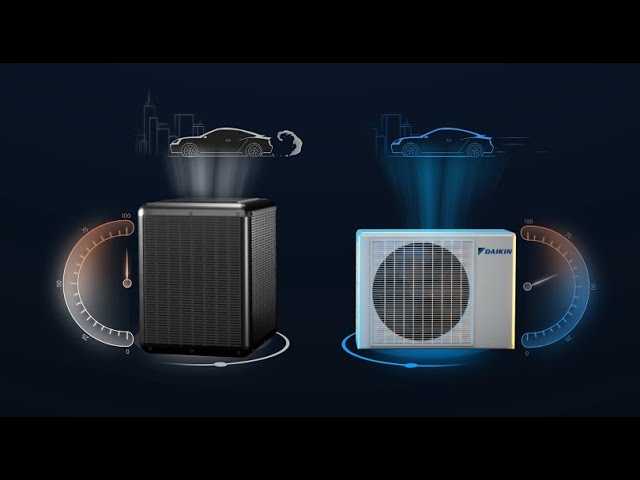
The Daikin FIT heat pump features variable-speed inverter technology for energy efficiency, precise temperature control, superior dehumidification during St. Louis’ steamy summers, and quiet operation.
Heat pumps can also work alongside a traditional gas furnace, in what’s called a “dual fuel system.” The heat pump handles the cooling and the majority of your heating needs, with the system automatically switching to the gas furnace in extremely cold conditions, ensuring consistent warmth no matter how low the temperature drops.
Right now, we’re seeing the best deal we’ve ever seen for high-efficiency HVAC systems, due to overlapping incentives that can save you money in multiple ways:
In addition to Ameren’s rebates, the federal government is offering tax credits for high-efficiency heating and cooling systems installed by December 31, 2025. Qualifying systems include high-efficiency central ACs, air source and ground source (geothermal) heat pumps, mini-split ACs or heat pumps, and smart thermostats (with installation).
Getting your new system installed right— fully code-compliant using industry best practices—means you’ll enjoy worry-free, energy-efficient comfort for years to come. That’s why partnering with the right contractor is crucial to your satisfaction.
At SmartHouse, we take care of everything – from finding the perfect system to fit your needs to expert installation and beyond! We’re here to make your experience smooth and stress-free, focusing on honest, clear communication, friendly, expert service, and results you can count on!
At SmartHouse, we’re here to help you stay warm, increase your comfort, and save on energy bills. When we start a job, our technicians ask, “What is the right thing to do?” before making any decisions. Let us bring that attitude to your home.