Top 6 Questions to Ask Before Replacing Your HVAC System. So, you’re going to replace your HVAC system. Or, maybe you’re considering replacing it, but aren’t quite sure yet. In either case, be sure to ask these questions before making any decisions:
- Should I Replace My HVAC System or Have It Repaired?
- What Type of HVAC System Is Best for My Home?
- What Size HVAC System Is Right For My Home?
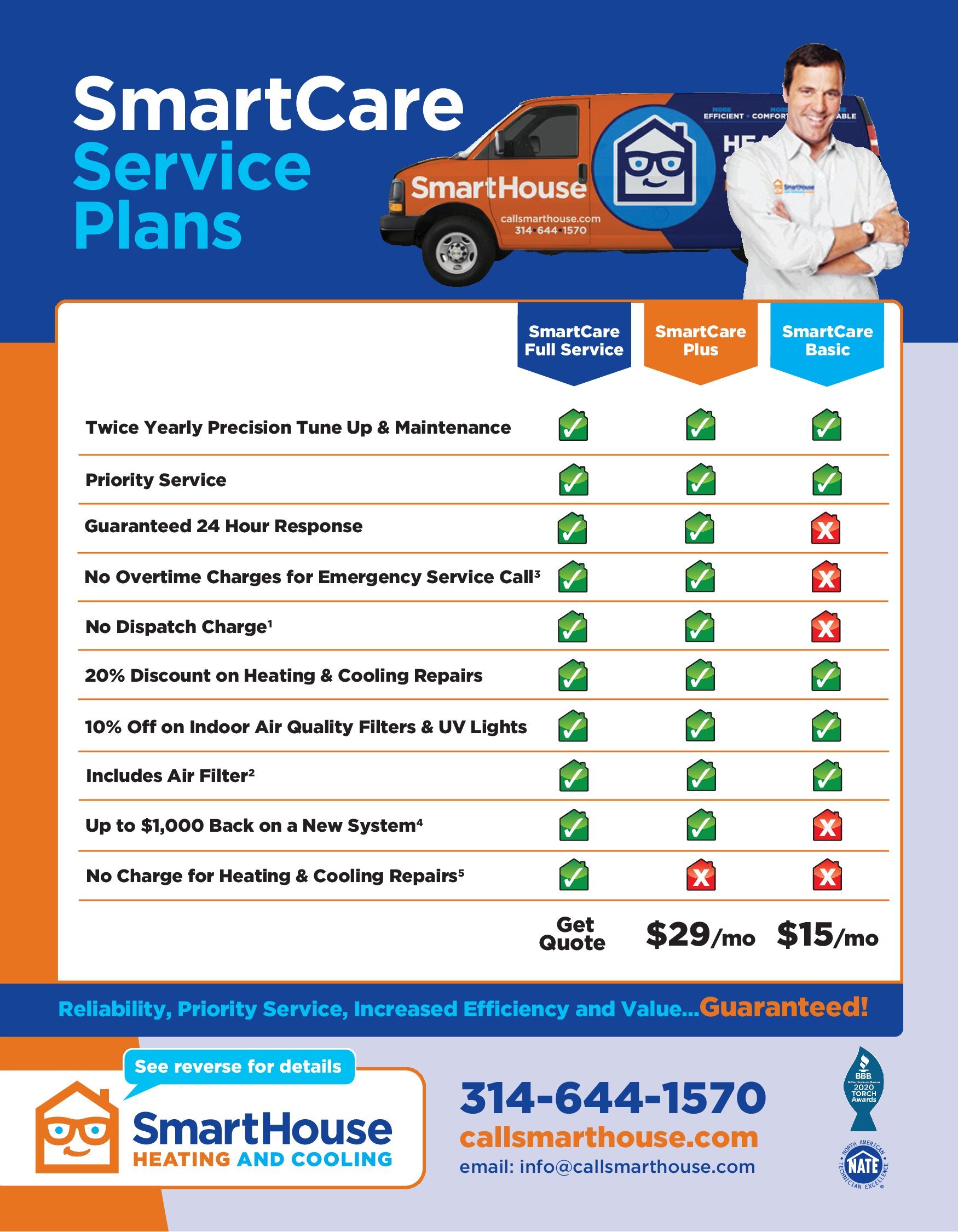
- Does My HVAC Contractor Offer a Service Plan for My System?
- Is It More Cost-Effective to Replace My HVAC System Altogether?
- Are There Any Special Offers or Rebates in St. Louis for Replacing My HVAC System?
We’ll look at all of these in detail below, but if you’re not sure on any of them, or if there are other questions you have, you can reach out to a SmartHouse expert by calling 314-370-1816, texting 314-310-2242, or contacting us online. We’re here to provide you with comfort while saving you money.
Should I Replace My HVAC System or Have It Repaired?
If there’s something wrong with your HVAC system, the first question to ask is whether repairing or replacing is the appropriate response. Every case is different, but there are some main considerations that you can use to help you decide:
- Age: If the system is under 10 years old, repairing is probably viable, as the system is likely under warranty. If it is over 15 years old, then it’s probably better to replace it.
- Frequency of Issues: Isolated issues can typically be repaired, while recurring issues indicate that it’s time to replace the unit.
- Rising Bills: As the unit ages, it becomes less energy efficient, and you will likely see your energy bills rise. Replacing an inefficient HVAC system with a newer, more efficient one will lower your energy use.
- Warranty: If the system is under warranty, repairs are much easier. Out of warranty, repair costs will rise significantly, and replacing could make more sense.
- 50% Rule: A common rule of thumb is that if a repair costs 50% or more than the cost of a new unit, you’re better off replacing.
To know whether repair or replacement is better for your St. Louis home, schedule an appointment with SmartHouse. A certified HVAC technician will come to your home, diagnose your system, and offer honest, expert advice on how to move forward.
What Type of HVAC System Is Best for My Home?
There are a few different types of HVAC systems, and when deciding on a replacement, you’ll want to consider the fit of each:
- Ducted Air Source Heat Pumps: This can both heat and cool your home efficiently, allowing for year-round comfort while keeping electricity bills down.
- Ductless Mini Splits: Ductless mini splits are systems that connect an outdoor unit, which compresses/condenses the air, to an indoor unit that distributes the air. They can either be cooling only or heat pumps, which both heat and cool. A ductless mini split lets you set precise temperatures for different zones in your house, making them good for older homes without ductwork or new additions where ductwork can’t be extended.
- Geothermal Heat Pumps: A geothermal heat pump is a heating system that collects heat from underground (as opposed to air source heat pumps, which collect it from the air outside) and releases it in your home during the winter, and can reverse the process to remove heat from your home during the summer. These are very efficient, with the longest potential lifespan. But they have the highest upfront cost, and can be space-prohibitive.
- Furnaces: A furnace is a machine that transforms fuel into heat for your home’s air. A gas furnace uses natural gas or propane as fuel for a controlled fire, while an electric furnace uses electricity to power heating coils. They work with ducts to provide fast heating. A separate cooling system will be needed.
- Boilers: Boilers use water or steam to heat your home. They do this by heating the water, then circulating it to radiators spread throughout your home. The heat will then passively flow out into the areas around the radiators. They can vary in fuel types, including natural gas and electricity. Boilers are quiet and provide even heating, but are slow. They also need a separate cooling system.
- Air Conditioning: AC units are widespread and largely affordable. They work by using refrigerant to absorb the heat inside your home and transfer it outdoors to be released. AC systems come in all levels of efficiency, including high efficiency. A separate heating system is needed alongside the AC system.
- Dual Fuel Systems: In heating seasons, it can provide the best of both worlds, using an electric heat pump for heating and cooling, with a gas furnace for backup heat during intense cold fronts to maintain comfort.
What Size HVAC System Is Right For My St. Louis Home?
Sometimes it’s easy to get caught up in the adage “bigger is better,” particularly with HVAC systems that we use year-round. However, having a unit that is too big can cause it to “short cycle,” essentially meaning it will turn off and on more often than it should. A short cycle is a problem because it will lead to uneven heating/cooling, inefficient energy use with higher bills, and increased wear on your unit.
A unit that’s too small can also be a problem, though. If it’s too small, the HVAC system could run constantly without ever reaching the desired temperature. This is also inefficient and can lead to uncomfortably hot or cold rooms.
SmartHouse project managers use a Manual J load calculation- the industry’s standard – to determine the correct size for your home’s HVAC system.
What’s the Right-Sized Furnace? (and Why it Matters!)
Does My St. Louis HVAC Contractor Offer a Service Plan for My System?
When replacing your HVAC system, you want to make sure you’re getting the most out of your new system. If your installation contractor offers a service plan, it can take the burden off you by tracking when your system is due for maintenance and monitoring its health.
SmartHouse offers the SmartCare Service Plans in St. Louis – allowing you to protect your home investment with ease. This includes two Precision Tune-Ups per year, a 20% discount on any needed repairs, and priority service over customers without a plan. A regular annual maintenance plan will also satisfy warranty requirements for most systems.
Is It More Cost-Effective to Replace Both My Heating and Cooling Systems at the Same Time?
Only one part of your HVAC system may be having significant issues, but it might make sense to go ahead and replace everything altogether. While the upfront cost may be higher, there are several benefits:
- Modern systems are designed to work together for maximum efficiency and allow you to take advantage of features like variable capacity motors and communicating systems.
- Regardless of the time of year, it will always be more cost-effective to replace your heating and cooling systems together – saving on labor costs – rather than to replace them individually within a short time period.
- You can keep your warranties in sync, making potential future repairs less of a headache.
- Increase your home value – this can be especially attractive if you’re planning on selling in the near future.
How Can I Save Money While Replacing My St. Louis HVAC System?
Rebates and special offers can make for huge savings when replacing your HVAC system. If there is a deal, applying it to the whole HVAC system replacement can result in even greater savings than just a repair or a partial replacement.
Be sure to check SmartHouse’s current specials for updated information on current offers and/or rebates.
For These Questions and More, Contact SmartHouse HVAC Specialists for Answers
If you’re looking to replace your HVAC system, repair a specific part, or need help finding the answers to any of these questions, SmartHouse Heating and Cooling has got your back.
We offer:
Live people monitor our phones, 24/7, if you have any questions or concerns. Call us now at 314-370-1816, or get in touch online.